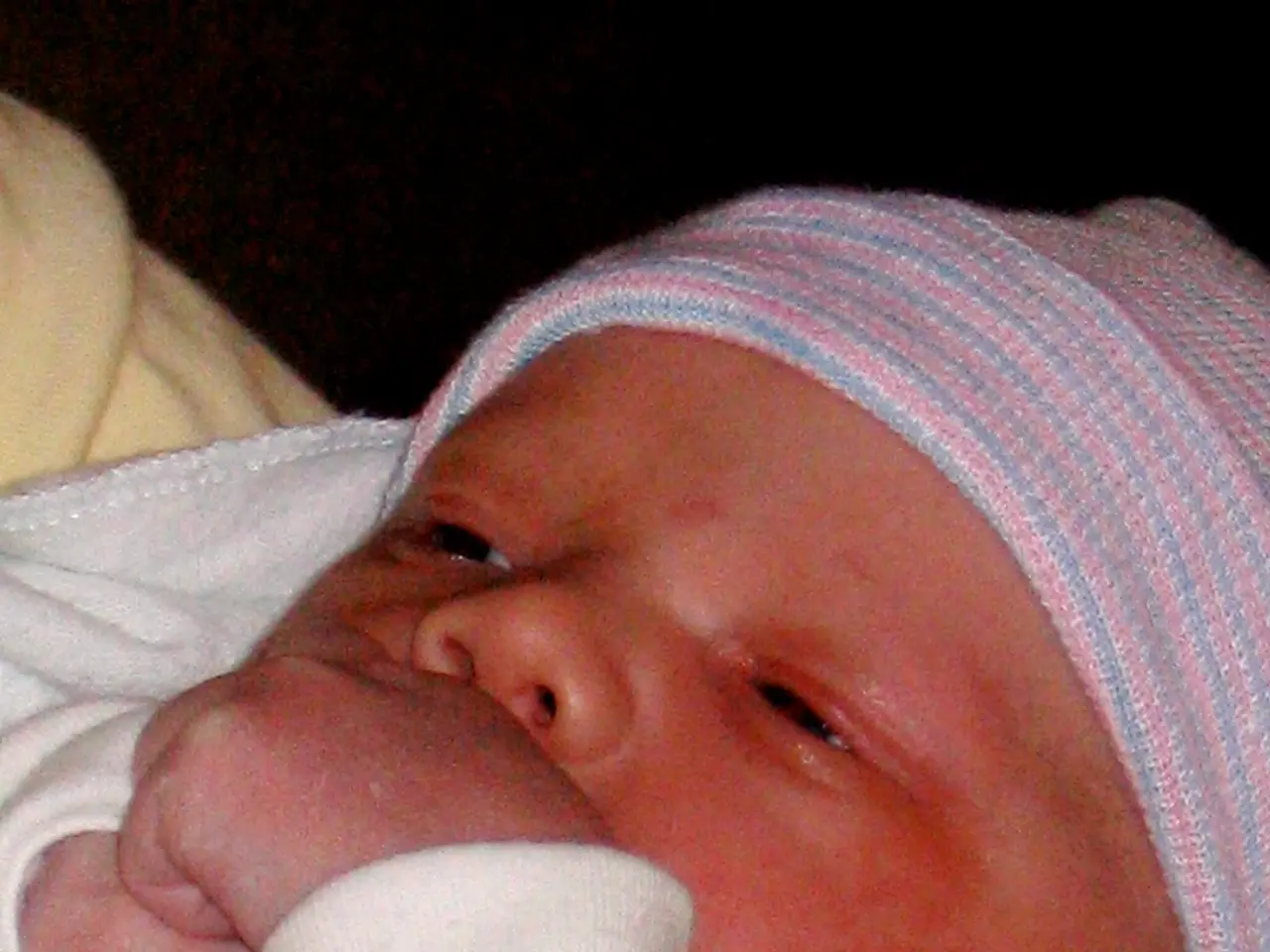
Baby Face Rash: Visuals, Origins, and Remedies
In the world of parenting, one of the most common concerns is identifying and managing baby rashes. This article aims to provide valuable insights into some of the most common facial rashes that babies may experience, along with their treatment and when to seek medical advice.
Firstly, let's discuss Eczema (Atopic Dermatitis), a condition characterized by dry, itchy, red or rough patches on the cheeks, scalp, or behind the ears. It often worsens with dryness or irritants and can be managed with fragrance-free moisturizers, lukewarm baths, soft cotton clothes, and eczema creams. If the rash worsens, becomes weepy or infected, baby is very uncomfortable, or signs of infection like oozing or crusting appear, it's crucial to consult a healthcare provider promptly.
Cradle cap, or Seborrheic Dermatitis, is another common rash seen in newborns. It presents as yellowish, greasy, scaly patches on the scalp and sometimes face. Gentle washing with baby shampoo, soft brushing to remove scales, and medicated creams (if severe, prescribed by a doctor) can help manage this condition. If the scalp becomes red, swollen, or spreads beyond typical cradle cap areas, or if there is significant discomfort, seek medical advice.
Baby Milia, tiny white bumps usually found on the nose, cheeks, or chin, require no treatment as they usually resolve on their own without intervention. However, if they persist beyond a few months or if they become inflamed or infected, seek advice from a healthcare provider.
Newborn Acne, small red or white bumps mostly on the cheeks, forehead, or nose, appearing within the first weeks after birth, can be managed by keeping the face clean with lukewarm water and a soft cloth. If bumps appear irritated, swollen, spreading quickly, or do not improve, consult a healthcare provider to rule out infection or allergies.
Slapped Cheek Syndrome, also known as Fifth Disease, is characterized by a bright red rash on both cheeks, which may spread to the body with a lacy pattern. It may be accompanied by mild fever or cold symptoms. While the symptoms usually clear up without treatment, it's essential to see a doctor if rash is accompanied by high fever, joint pain, or if the child is immunocompromised.
Lastly, Measles, a highly contagious disease, is identified by a maculopapular rash starting on the face, spreading downward. Accompanied by high fever, cough, runny nose, and red, watery eyes, measles requires urgent medical care if rash appears with high fever, breathing difficulty, or severe symptoms. Measles requires prompt medical evaluation and report.
In addition to these specific rashes, general care tips for baby rashes include using fragrance-free and gentle soaps and lotions, avoiding hot water, dressing babies in soft, loose cotton clothing, avoiding rubbing the skin, patting dry gently after bathing, maintaining good hygiene, and keeping rash areas dry.
Parents or caregivers should always seek professional advice promptly if the rash is accompanied by signs of infection (such as oozing, crusting, swelling), if the baby appears very uncomfortable or unwell, or if the rash spreads rapidly or does not improve with standard care. Early medical intervention can prevent complications and provide targeted treatment suited to the child's condition.
[1] Mayo Clinic. (2021). Baby rashes: Causes, symptoms, and treatment. Retrieved from https://www.mayoclinic.org/healthy-lifestyle/infant-and-toddler-health/in-depth/baby-rash/art-20046158 [2] Centers for Disease Control and Prevention. (2021). Slapped Cheek Syndrome (Fifth Disease). Retrieved from https://www.cdc.gov/fifthdisease/index.html [3] National Health Service. (2021). Eczema in children. Retrieved from https://www.nhs.uk/conditions/eczema/ [4] Centers for Disease Control and Prevention. (2021). Measles. Retrieved from https://www.cdc.gov/measles/index.html
- A caregiver might encounter a bipolar rash-skin condition in a newborn, characterized by tiny white bumps usually found on the nose, cheeks, or chin.
- While baby milia often resolves on its own, switching to a fragrance-free moisturizer may help soothe the rash if it becomes inflamed or infected.
- Eczema, a dry, itchy, red or rough patchy rash, can be managed with multiple treatments including creams, lukewarm baths, and soft cotton clothes.
- Diabetes patients, especially those with type 1, may experience skin issues like acne due to fluctuations in blood sugar levels, requiring careful attention to health-and-wellness routines.
- Infantile acne, small red or white bumps appearing on a newborn's face, might be attributed to the mother's hormones, emphasizing the need for careful skin-care practices during pregnancy.
- Seborrheic dermatitis, commonly known as cradle cap, can be managed with baby shampoo, soft brushing, and medicated creams if it becomes severe.
- Certain personas seeking natural or predictive treatments for rashes might find research on the benefits of Aloe Vera (AQ) for soothing skin irritations.
- Obesity can increase the risk of developed conditions such as diabetes and eczema, highlighting the importance of maintaining a healthy lifestyle.
- A newborn experiencing a seizure while suffering from infantile rash-sclerosis (IRS) may require urgent medical attention, as this condition can lead to neurological complications.
- Caregivers should be aware of nutrition-related skin conditions like obesity-related acne and eczema in children, and consult health professionals if necessary.
- NSCLC (non-small cell lung cancer) might not initially present skin symptoms, but some patients may experience skin rashes as a side effect of certain treatments.
- AQ-based skin care products can help manage rashes caused by eczema and diaper rash, offering a gentle and moisturizing solution.
- Measles, a highly contagious disease, can cause a rash, fever, and other symptoms, requiring prompt medical care to prevent complications like Alzheimer's and other neurological issues.
- HST (human papillomavirus vaccination) can prevent several health issues such as genital warts and cervical cancer, and could potentially reduce the risk of certain skin-related conditions in the future.
- Science continues to advance in the health-and-wellness field, offering new treatments and therapies for various rashes, eczema, diabetes, and other conditions that may impact an individual's skin and overall health.