
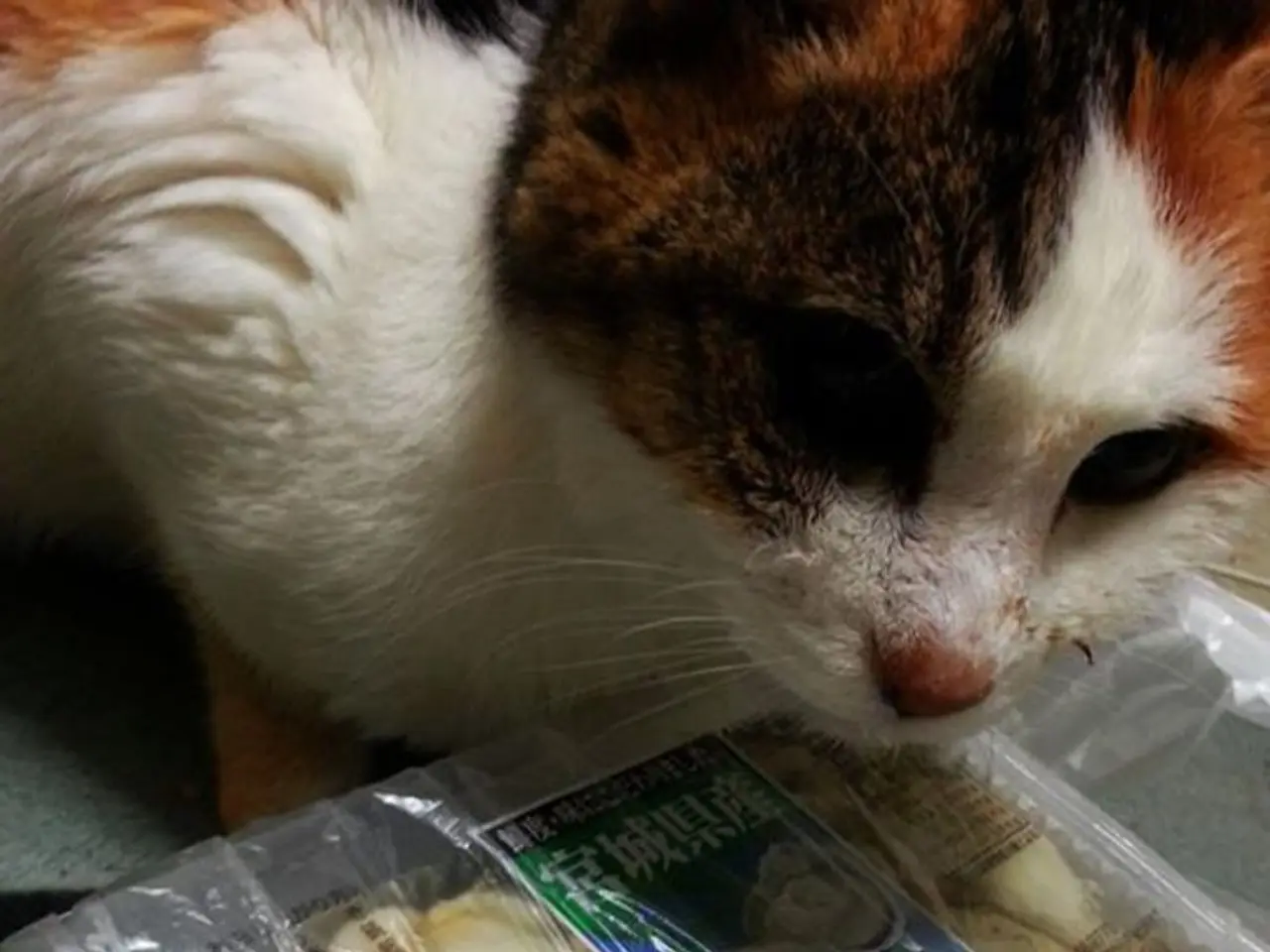
Consumption of grapes and raisins is harmful to felines.
In the world of feline care, it's crucial to be mindful of what our furry friends are consuming. One food that cat owners should avoid giving to their pets is grapes.
Grapes and raisins, though harmless to humans, can pose a serious threat to cats. The exact toxin responsible for this danger is yet to be identified, but it's suspected that these fruits can lead to kidney damage.
Cats, being obligate carnivores, require a meat-based diet to thrive. Grapes and raisins, therefore, do not align with their dietary needs. Ingesting even small amounts can lead to severe symptoms, including gastrointestinal issues like vomiting and diarrhea within 6 to 48 hours after consumption. These early symptoms are often followed by lethargy, weakness, loss of appetite, and abdominal pain.
In more extreme cases, cats may develop rapid breathing, tremors, dehydration, changes in urination (including increased frequency or inability to urinate), and potentially, kidney failure if left untreated.
The onset of symptoms usually begins within 6 to 48 hours, and neurological signs may emerge after 2-3 days.
Given the unpredictability and severity of the reaction, any ingestion of grapes or raisins by cats should be treated as an emergency requiring prompt veterinary care.
To prevent these serious health risks, it's best to keep grapes out of reach for cats. When it comes to treats for cats, stick to options that align with their diet, such as freeze-dried chicken, commercial cat treats, or vet-approved snacks.
It's also important to remember that other human foods like dairy products, white chocolate, and various other human foods can also be harmful to cats. If a cat eats grapes or raisins, immediate action should be taken by contacting a vet or animal poison control.
In such cases, veterinarians may induce vomiting, administer IV fluids, and monitor kidney function to help manage the situation.
In summary, the toxicity of grapes in cats is not fully understood, but grapes and raisins are known to be potentially toxic and can lead to severe symptoms, including kidney failure. To ensure the health and well-being of our feline friends, it's best to keep these fruits out of reach.
- In the realm of science and health-and-wellness, understanding the potential dangers of common human foods like grapes and raisins is crucial for cat owners, as these seemingly harmless fruits can pose a threat to pets.
- To maintain the lifestyle of our beloved cats, it's essential to opt for treats that align with their dietary needs, such as freeze-dried chicken, commercial cat treats, or vet-approved snacks, rather than offering them potentially toxic fruits like grapes and raisins.