
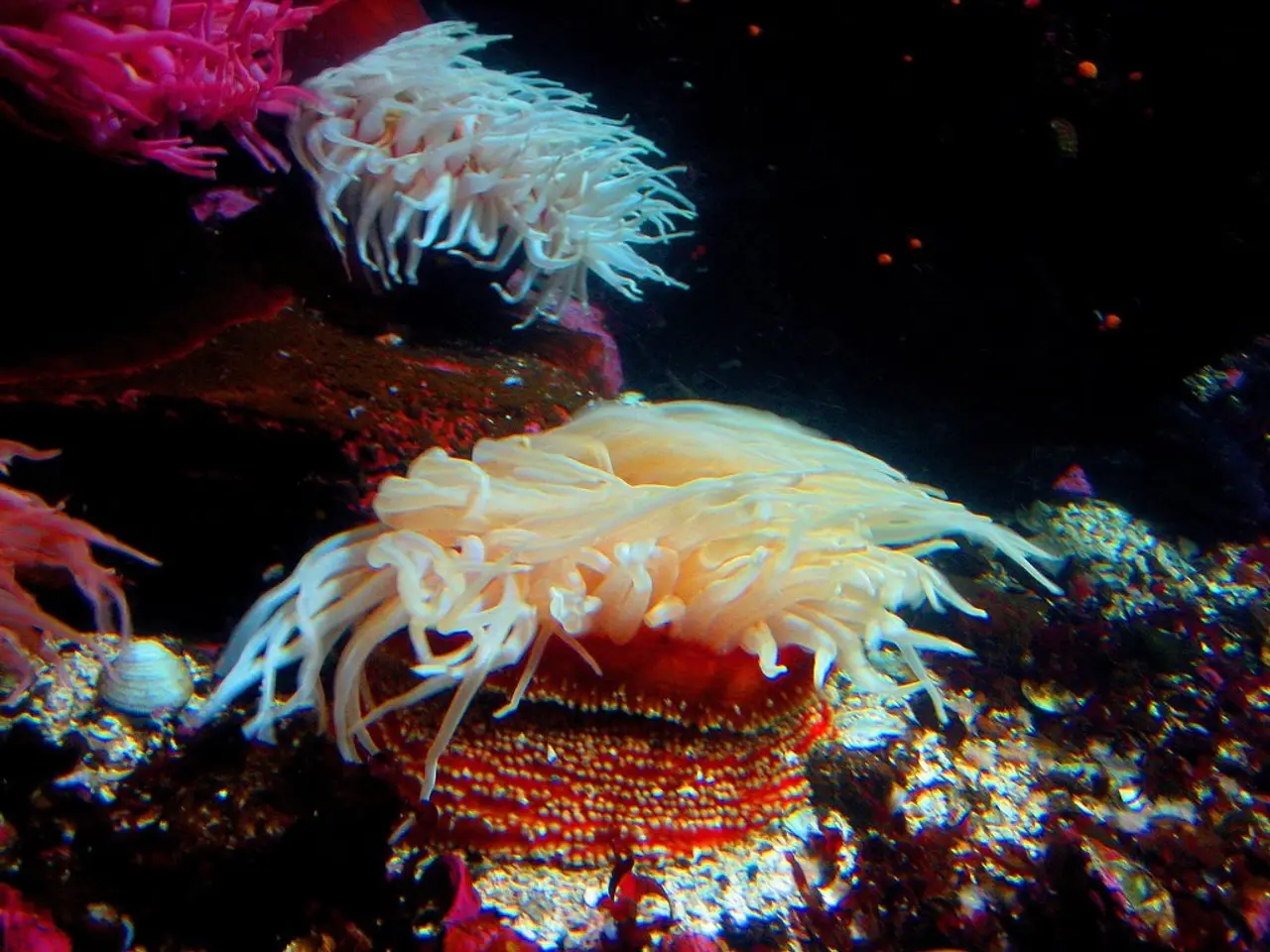
Intense Coral Bleaching Event in Western Australia's Waters Breaks Previous Records - Intense Coral Bleaching: Exceptional Levels off Western Australia's Coasts
In the heart of the Australian coast, a heatwave is causing widespread coral bleaching, with the Great Barrier Reef and Western Australia's Pilbara region experiencing the brunt of the crisis.
Coral bleaching occurs when corals undergo heat stress, expelling the algae living on them, leaving behind calcareous white coral skeletons. The main cause of this coral loss is heat stress induced by climate change.
To measure this heat stress, scientists use the Degree Heating Weeks (DHW) metric. This empirical measure combines both the intensity and duration of sea surface temperatures exceeding 1°C above the seasonal maximum, quantifying prolonged exposure to elevated temperatures that can cause coral bleaching.
Organisations like NOAA's Coral Reef Watch provide Heat Stress Gauges for specific regions, such as off Western Australia and the Great Barrier Reef. These gauges integrate satellite-monitored sea surface temperature data and model projections to give near-real-time coral bleaching thermal stress alert levels and forecasts over upcoming weeks.
In the lab, coral heat stress can be simulated using controlled temperature treatments with precise ramping protocols, allowing scientists to monitor coral physiological responses under varying temperature exposures.
The Great Barrier Reef, a UNESCO World Heritage site, has been particularly hard-hit. Last year, the reef lost more corals than ever before, according to AIMS's annual report. The Pilbara region in Western Australia has values of coral heat stress exceeding 15, with some areas reaching up to 30.
Eight Degree Heating Weeks (DHW) is considered critical, as mass coral deaths usually occur at this level. Particularly affected were stony corals of the genus Acropora, which are quick-growing but extremely susceptible to external influences.
The climate crisis is causing these heat-stress events to occur more frequently, intensely, and extensively, giving coral reefs little time to recover. Reefs require 10 to 15 years for full regeneration, making the current situation dire.
This news pertains to a heatwave affecting coral reefs in Australia, a crisis that underscores the urgency of addressing climate change to protect these vital ecosystems.
- Despite the efforts of various EC countries in addressing climate change, the employment policy should prioritize scientific research, particularly in environmental science, to develop effective strategies for mitigating coral bleaching caused by heat stress.
- In the quest for health and wellness, medical-conditions related to heat stress, such as coral bleaching due to climate change, must not be overlooked, as they pose significant threats to the survival of coral reefs.
- As the climate crisis intensifies, employment policies in environmental science should focus on the development of innovative solutions to combat coral bleaching, ensuring the preservation of reefs for future generations, contribute to the global goals of health and wellness, and promote sustainable economic growth.