
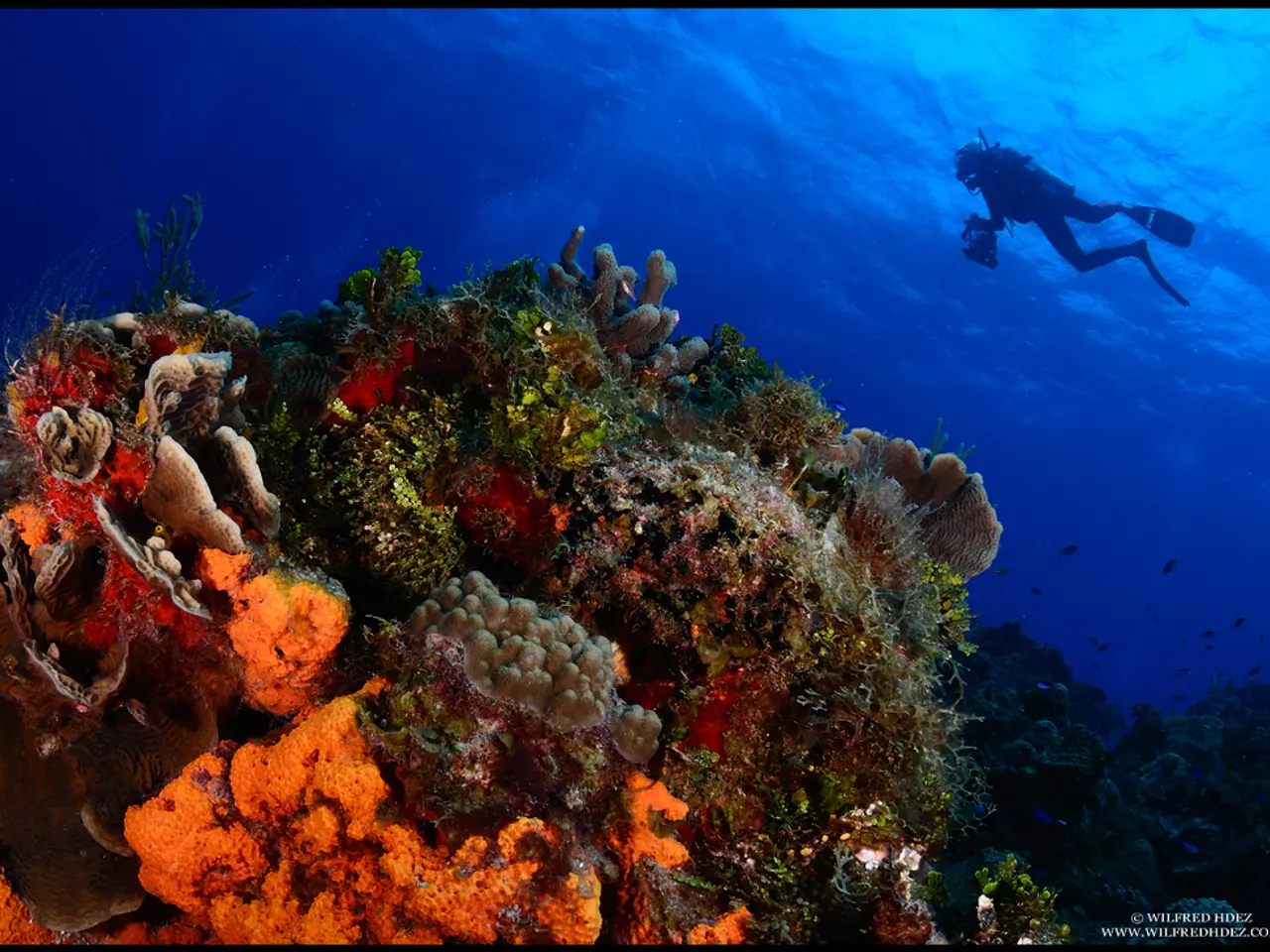
Pioneers Explore the Depths of the Gulf of America, Develop Roots There
The Gulf of America, formerly known as the Gulf of Mexico, has witnessed a significant milestone this summer with the introduction of a conveyor transporting vividly coloured corals to new homes on the deep seafloor. This pioneering project, part of a larger initiative to better understand the biology and mode of reproduction of these coral species, marks the first direct outplanting efforts to restore coral communities damaged by the 2010 Deepwater Horizon oil spill in deep areas of the Gulf.
Collaborators from the University of Rhode Island and University at Buffalo have prepared the collected fragments of three octocoral species - Thesea nivea, Muricea pendula, and Swiftia exserta, commonly referred to as sea fans - for outplanting in temperature-controlled environments. The corals, fan-like and coming in colours such as orange, purple, and white, were transported 230 feet below the surface using a "deep-sea elevator" designed by NOAA's Southeast Fisheries Science Center for outplanting trials.
The outplanting racks were lowered onto the deep-sea elevator and transferred by the Beagle, a remotely-operated vehicle (ROV) owned and operated by Marine Applied Research and Exploration, to the sea floor. Temperature and current meters were deployed, and water samples were collected to monitor the local environment.
The testing of this technique at sea was an exciting highlight for the scientists involved, as it could potentially help the transplanted corals grow and reproduce, replacing individuals lost to injury and providing more habitat for fish and invertebrates that rely on corals to survive and thrive.
This coral propagation project is part of the Deepwater Horizon restoration program's Mesophotic and Deep Benthic Communities project portfolio. More than 770 square miles of deep-sea and mesophotic (low light) habitats were injured by the 2010 oil spill, and the Mesophotic and Deep Benthic Communities at-sea expeditions aim to improve understanding and awareness of these poorly explored habitats and restore and protect their unique communities of corals, fish, and invertebrates.
While the Gulf of America's coral restoration landscape shows progress in nursery and transplantation efforts and enhanced scientific monitoring aimed at reef resilience, direct, recent updates regarding deep-sea coral propagation specifically addressing Deepwater Horizon spill damage appear to be lacking in these sources. Ongoing monitoring and regional collaborative projects promise to contribute to coral recovery, but documenting advancements targeting deep-sea corals in the Gulf post-2010 oil spill requires further specialized information beyond the current search results.
This initiative is not the only coral restoration effort in the region. There are ongoing international collaborations aiming to restore coral reefs off Florida and in the Caribbean, including propagation of elkhorn coral species to rebuild damaged reefs. Similarly, other coral restoration efforts described in the region, such as in Belize, involve planting tens of thousands of coral fragments with a focus on identifying genetically resilient corals to transplant to stressed reefs. Such methods could be adapted or are similar to restoration strategies in Gulf of Mexico habitats.
The expedition and science mission were run by NOAA's National Centers for Coastal Ocean Science. A team of technical divers coordinated by Moody Gardens Aquarium, NOAA, and California Academy of Sciences returned to the outplanting sites in late July and found that 95 percent of the corals placed in May had survived over the last 2 months and appeared healthy.
As the Gulf of America continues to recover from the Deepwater Horizon oil spill, these coral restoration efforts offer a glimmer of hope for the future of its deep-sea ecosystems. With ongoing research and collaboration, the goal of restoring and protecting the unique communities of corals, fish, and invertebrates in the Gulf seems within reach.
- The scientists involved in this coral propagation project are hoping that this innovative technique can help the transplanted corals grow and reproduce, providing more habitat for various marine species relying on them.
- This project is part of a larger initiative focusing not only on coral restoration but also on improving understanding and awareness of the poorly explored deep-sea and mesophotic habitats in the Gulf of America.
- While there are ongoing coral restoration efforts in the region, specific updates addressing damage caused by the Deepwater Horizon spill in deep-sea corals appear to be lacking in current sources, warranting further specialized information.
- The successful outcome of this project could potentially be applied to similar restoration strategies in other Gulf of Mexico habitats and international coral reef restoration efforts, such as those off Florida and in the Caribbean.