
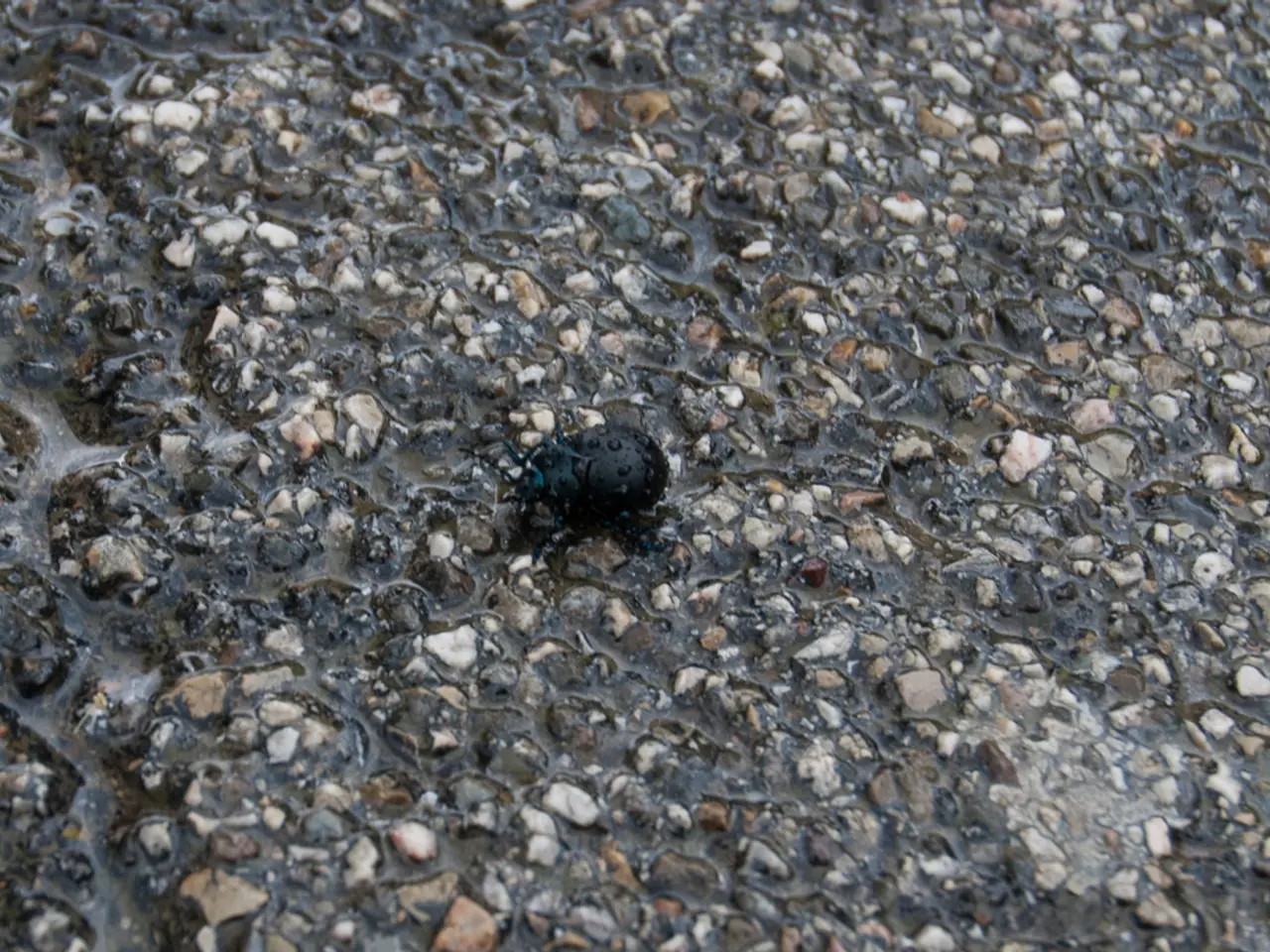
Potential Danger: Rapid Spread of Lethal Black Poison Beetles
In the southern regions of Germany, near large rivers such as the Neckar, the Danube, and the Rhine, a black beetle known as the black-blue oil beetle is commonly found. This beetle prefers sandy paths, dunes, dry grass at forest edges, and meadows full of orchards.
However, contrary to some rumours, there is no widely known deadly black beetle with potent venom inhabiting these rivers in Germany. Beetles, in general, are not known for venomous bites harmful to humans, especially not aquatic or riparian beetles in these regions.
Despite this, the black-blue oil beetle's venom, cantharidin, is potentially lethal for humans. If skin contact with the black beetle occurs, the affected areas should be cleaned with water as soon as possible. If a person accidentally swallows a black beetle, they should call the poison control center immediately and try to vomit it up right away.
The development from egg to adult insect takes two years for the black beetle, and its hatching time and peak season are in May, making it known as the May worm. The lifespan of the black beetle is relatively short, rarely exceeding a month.
Experts have issued a warning about the black beetle due to its venomous nature. They advise people to exercise caution when encountering this beetle. The venom of the black beetle is about five times more potent than that of the adder, making it a cause for concern.
While there is no deadly venomous black beetle in the rivers of Germany, it is essential to remember that any encounter with an unfamiliar insect should be approached with care. If you have any concerns about aquatic or semi-aquatic beetles in Germany or venomous aquatic animals in European rivers, consult a local expert or reliable source for accurate information.
Other science branches such as medical-conditions and health-and-wellness should address the potential risks of encounters with the black-blue oil beetle. Environmental-science experts suggest exercising caution when approaching this venomous beetle, as its venom, cantharidin, is about five times more potent than that of the adder, potentially lethal for humans.