
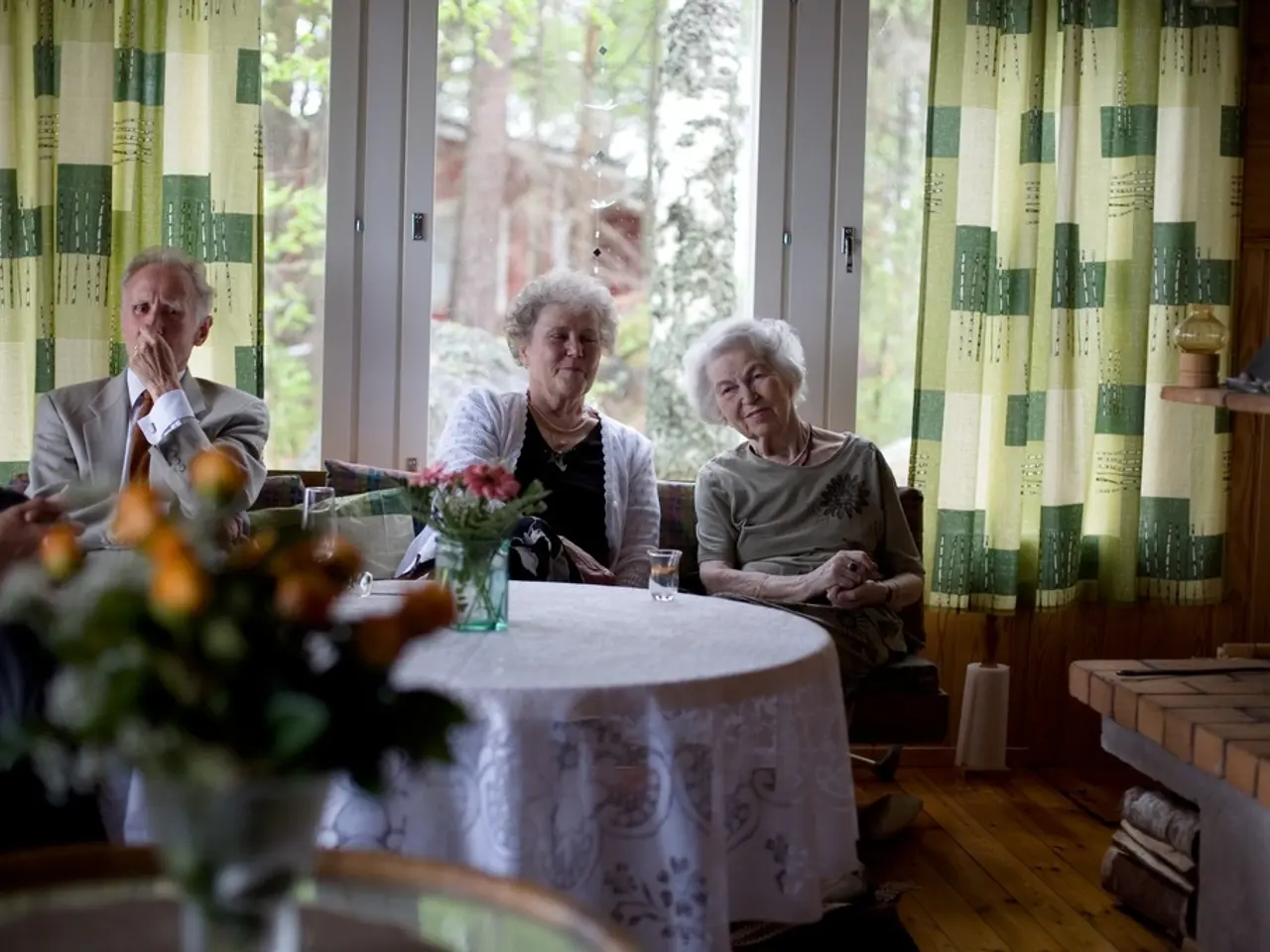
Strategies utilized by senior citizens in care homes to combat feelings of solitude
In the realm of elderly care, addressing loneliness among residents has become a significant focus. Loneliness, a feeling of isolation or disconnection from others, can have detrimental effects on the mental and physical health of elderly individuals in nursing homes.
Research has linked loneliness to negative health outcomes such as depression, anxiety, cognitive decline, and physical health problems like high blood pressure, heart disease, and weakened immune systems. To combat this, a multifaceted approach that incorporates both social and technological interventions is essential.
One effective strategy is personalized programming and activities. By tailoring programs to residents' interests and hobbies, nursing homes can encourage engagement and participation. Involving residents in planning activities also ensures they feel included and valued.
Technology integration is another key component. Utilizing interactive technologies, such as virtual visits with family and friends, and digital platforms for communication, can enhance social connections. However, it's important to remember that technology should complement human interaction rather than replace it.
Social skills training and support groups are also beneficial. These can help residents build confidence in social interactions and provide a platform for sharing experiences and feelings.
Befriending programs, where residents are paired with companions who offer emotional support and friendship, can also be effective. Encouraging volunteers or staff members to engage in regular visits and conversations with residents can foster meaningful relationships.
Cognitive Behavioral Therapy (CBT) can address underlying emotional issues that may contribute to loneliness. This therapy can help residents develop coping strategies for managing feelings of isolation.
Improving environmental factors, such as creating more age-friendly environments and enhancing transportation within the facility and to external events, can promote broader social interactions.
Family and community involvement is crucial. Encouraging family members to visit regularly and participate in activities with their loved ones, as well as inviting community groups to engage with residents, can help build connections outside the nursing home environment.
Monitoring for signs of loneliness, such as withdrawal, poor self-care, and changes in communication patterns, is essential. Developing targeted interventions to address these indicators can help combat loneliness effectively.
In addition, incorporating outdoor spaces, such as gardens or patios, where residents can spend time together in a natural setting, can also help combat loneliness.
By implementing these strategies, nursing homes can effectively address loneliness among elderly residents, improving their overall well-being and quality of life. Nursing homes and caregivers can support elderly residents in overcoming loneliness by creating a warm and welcoming environment, building meaningful relationships, providing adequate staffing and resources, and encouraging participation in activities.
- Science has shown that dementia and cognitive decline can be exacerbated by loneliness, placing a greater emphasis on mental-health interventions in nursing homes.
- In light of this, some nursing homes have begun incorporating music therapy into their programming, hoping to enhance residents' mood and improve sleep patterns, potentially minimizing feelings of isolation.
- Furthermore, some residents may benefit from supplements, such as omega-3 fatty acids or B vitamins, which have been linked to improved cognitive function and mood, helping to combat symptoms of dementia and loneliness.