
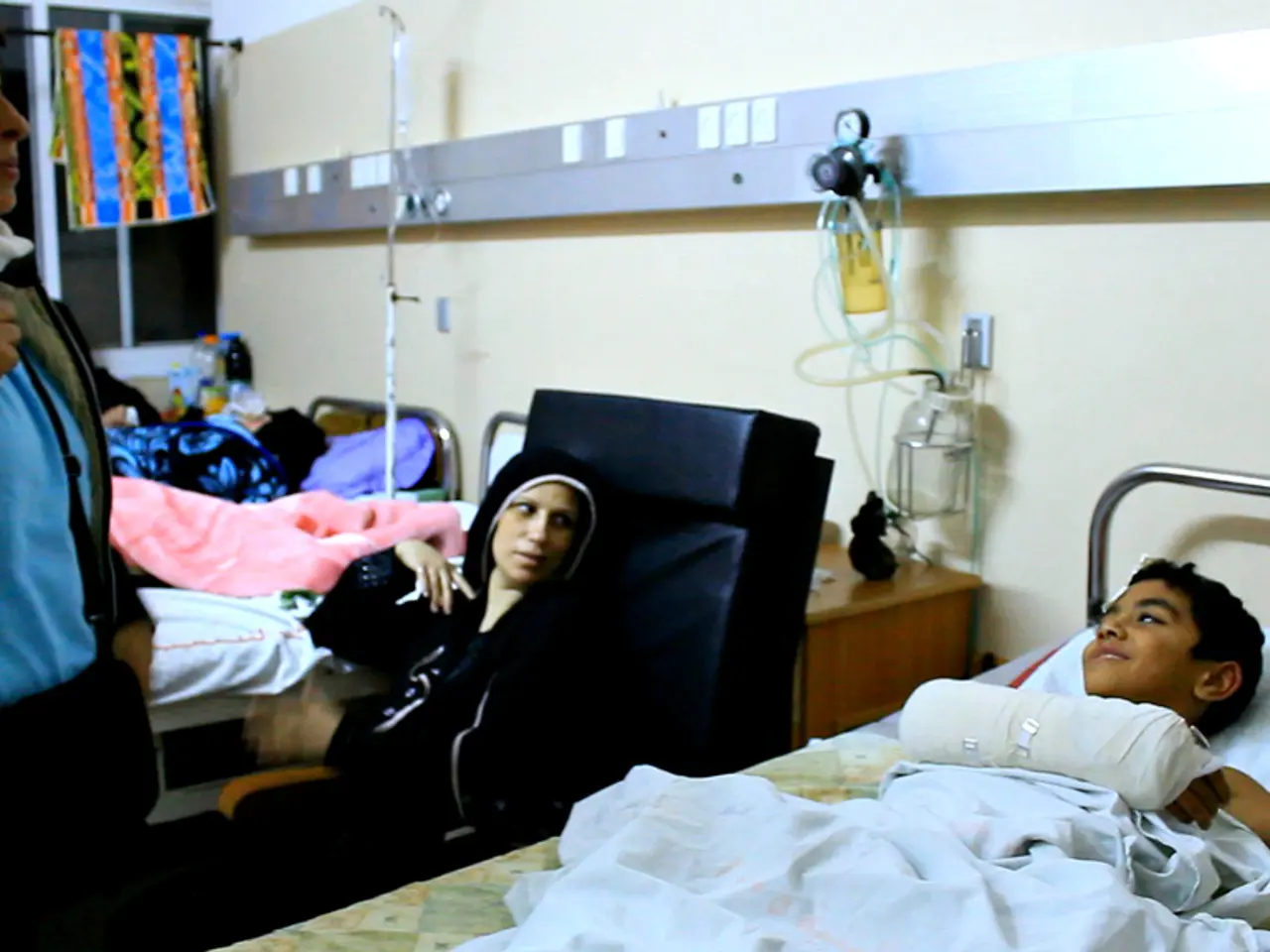
Struggles of Nurses Within Healthcare Facilities
In the heart of Germany, a political wage conflict is unfolding, with the struggle for hospitals taking centre stage. Trade unions, led by Verdi, are calling for change, voicing their frustrations and urging for solutions to overcome future challenges.
Verdi, a powerful German trade union, is advocating for genuine advance funding for hospital reform, rather than merely hesitant DRG softening. They demand needs-based staffing requirements, arguing that the current system is insufficient and leaves many hospitals understaffed. This call to action comes as the restructuring of inpatient care continues across the nation.
The book "Hamburg 2025" by Kalle Kunkel offers further insights into this struggle. With 280 pages and a price of 19.80 €, the book provides a detailed account of the challenges faced by hospitals and the trade unions fighting for their rights. Kunkel's interviews offer interesting insights into trade union awareness and the ongoing battle for hospital reform.
The success of relief efforts in the past has been attributed to the understanding that hospitals function as a whole, and the strengthening of only one professional group is not sufficient. Verdi in Berlin and North Rhine-Westphalia have made a second attempt to fight for relief, including non-refinanced professional groups outside "care at the bedside".
However, past relief tariff agreements have had limitations. Ineffective sanctions against employers for understaffing have been a significant concern, exacerbating the staffing issues in hospitals.
Diagnosis Related Groups (DRGs), first implemented in the US Medicare system in 1983, have had a profound impact on hospital staffing and privatization in Germany. The shift to DRG-based payment created financial pressure for hospitals to optimize costs, including labor, leading to reported labor shortages and cost pressures in certain specialties. Consequently, hospitals have been incentivized to restructure staffing, often leading to workforce reductions, increased use of part-time staff, or changes in care provision models.
Moreover, the financial incentives derived from DRG reimbursement have contributed to hospital privatization trends in Germany. Hospitals that can increase patient volume for profitable DRG categories or control costs more efficiently prosper under this system, giving private hospital operators a competitive advantage. This market pressure has led to significant growth in private ownership within the German hospital sector.
Securing relief tariffs at some hospitals nationwide is not enough, as not all hospitals have such agreements, and staffing regulations are not uniform in nursing care. Kalle Kunkel recently stated, "Patience - no more patience", emphasizing the urgency of the situation and the need for immediate action.
As the struggle for hospitals continues, the public is encouraged to stay informed and support the efforts of trade unions like Verdi in their quest for genuine hospital reform. The future of Germany's healthcare system hangs in the balance.
References:
[1] Tschernig, T., & Kunkel, K. (2021). The Impact of DRGs on Hospital Staffing and Privatization in Germany: A Critical Analysis. International Journal of Health Services, 51(1), 111-130.
[2] Schmid, M., & Kunkel, K. (2020). Labor Shortages and Cost Pressures in Certain Specialties: The Impact of DRGs on Pediatric Care in Rural Areas. Journal of Health Politics, Policy and Law, 45(3), 481-506.
- Verdi, a German trade union, is pushing for policy changes, advocating for workforce-wellness in the healthcare sector, specifically calling for needs-based staffing requirements to prevent understaffing in hospitals across Germany.
- Science and health-and-wellness perspectives highlight the impact of Diagnosis Related Groups (DRGs) on hospital staffing and privatization in Germany, demonstrating how DRG-based payment has incentivized cost optimization, resulting in workforce reductions and changes in care provision models.
- General news coverage emphasizes the ongoing political conflict within Germany, with hospitals at the center of the wage dispute and trade unions, like Verdi, pushing for genuine hospital reform, seeking relief tariffs to improve healthcare policy and legislation.