Warnings Issued to Individuals at Border in Hessen
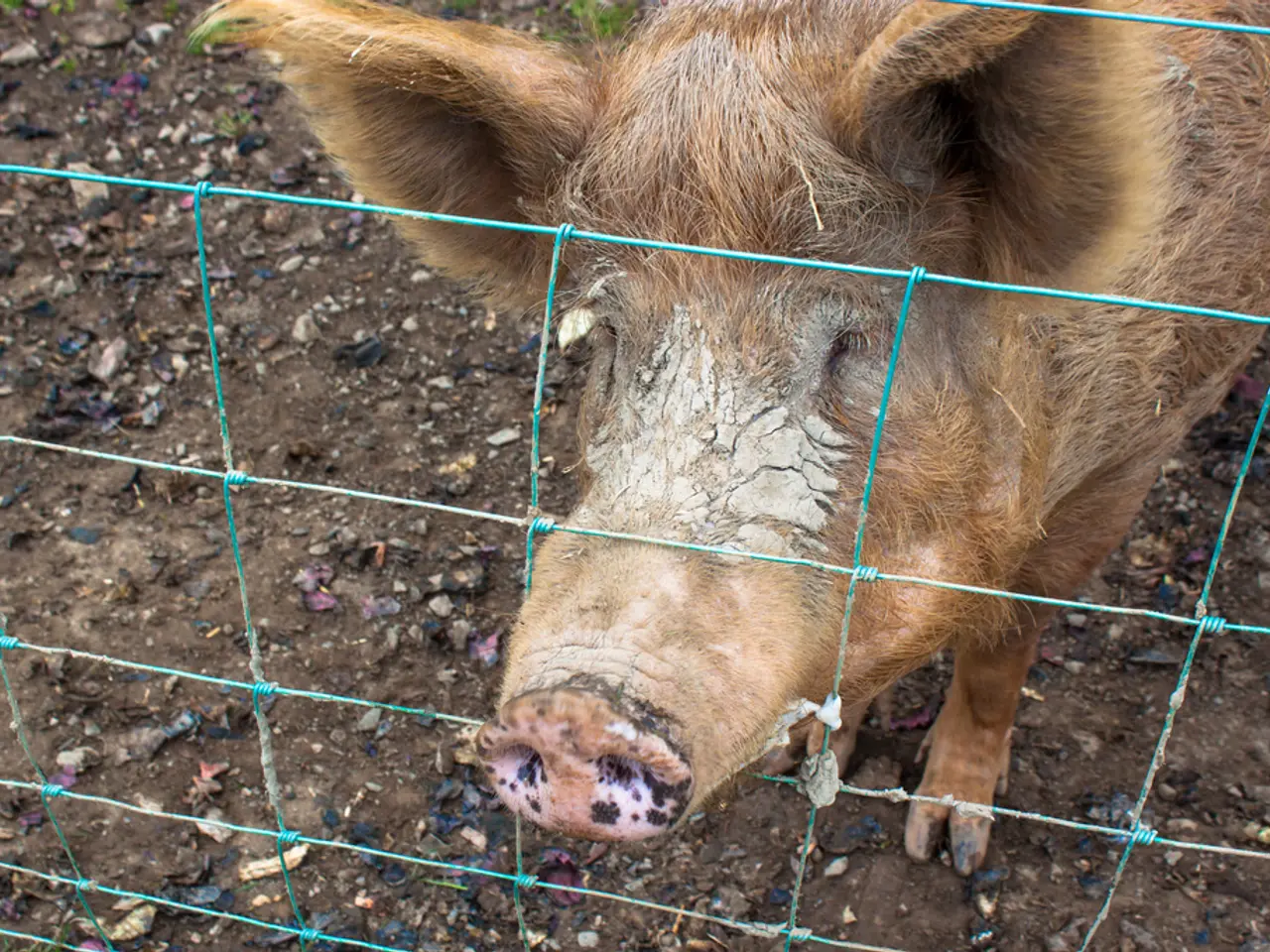
In a bid to prevent the spread of African Swine Fever (ASF) from North Rhine-Westphalia into Hesse, mobile electric fences are being rapidly deployed along roads near the border. The focus is on the Waldeck-Frankenberg, Marburg-Biedenkopf, and Lahn-Dill districts, where recent ASF cases have been detected in North Rhine-Westphalia.
These fences, both mobile and permanent, are erected within a 500-meter corridor along defined rural roads, creating physical barriers to contain wild boar and reduce ASF transmission risk. Legal decrees support the immediate installation and maintenance of these fences, and property owners must tolerate these protective measures due to the acute disease threat.
The Hessian Ministry of the Environment is urging the public to report dead or sick wild boars immediately if found near the North Rhine-Westphalia border. The ministry is emphasizing the importance of informing citizens about the dangers and protective measures regarding ASF.
African Swine Fever, which is harmless to humans and other animals, is almost always fatal for domestic and wild pigs. The virus was first confirmed in Hesse about a year ago, and since then, thousands of pigs have died from the virus or been culled in the state. However, no confirmed cases of ASF have been found in North and Central Hesse so far.
The authorities provide information on their website for the purpose of raising awareness among the local population. Reports can be made to the responsible veterinary authority or online via the animal find registry. The ministry stresses that early information to citizens is crucial for effective containment.
Experts will check if the wild boar has ASF if a dead or sick animal is found. The ministry is also emphasizing the importance of effective containment of ASF, as an outbreak in a pig farm can cause significant economic damage due to the need to cull the entire herd.
Mobile electric fences, along with search teams using trained dogs and drones to detect dead wild boar, and decontamination stations such as the mobile unit in Marburg-Biedenkopf, form part of broader containment strategies. The objective is to block wild boar movement across the state border, mitigating the ASF outbreak documented in the neighboring region.
[1] Hessian Ministry of the Environment press release, [date] [2] Hessian Ministry of Agriculture press release, [date]
Medical researchers are collaborating with veterinarians to study the impact of ASF on wild boar populations given its threats to both chronic diseases and overall health and wellness. The World Health Organization has also launched a global campaign to investigate the science behind ASF, recognizing its potential for zoonotic transmission to human populations.